

Interview with Nadezhda Krestinina: Text Version and Video


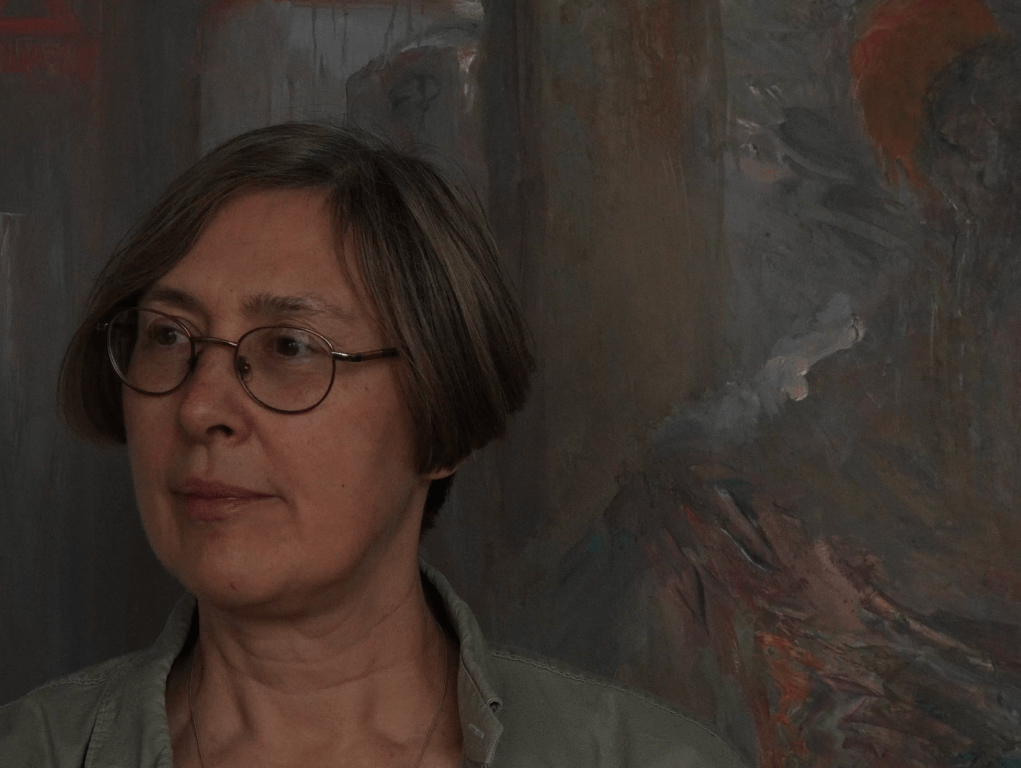
The interview with artist Nadezhda Krestinina was prepared with the participation of art manager and collector Ksenia Lagoiskaya and art manager Olga Marutyan. You can watch the video (in Russian) or read the text below.
Interview
"When I was six, I realized I was going to be an artist. This was my path, and I kept moving along it. I remember my relatives saying, 'Look how great she draws!' But when I entered art college, my grandmother remarked, 'You know, you drew better at six than you do now. Right now, I don't understand what you're doing at all.'"
Were there any artists in your family?
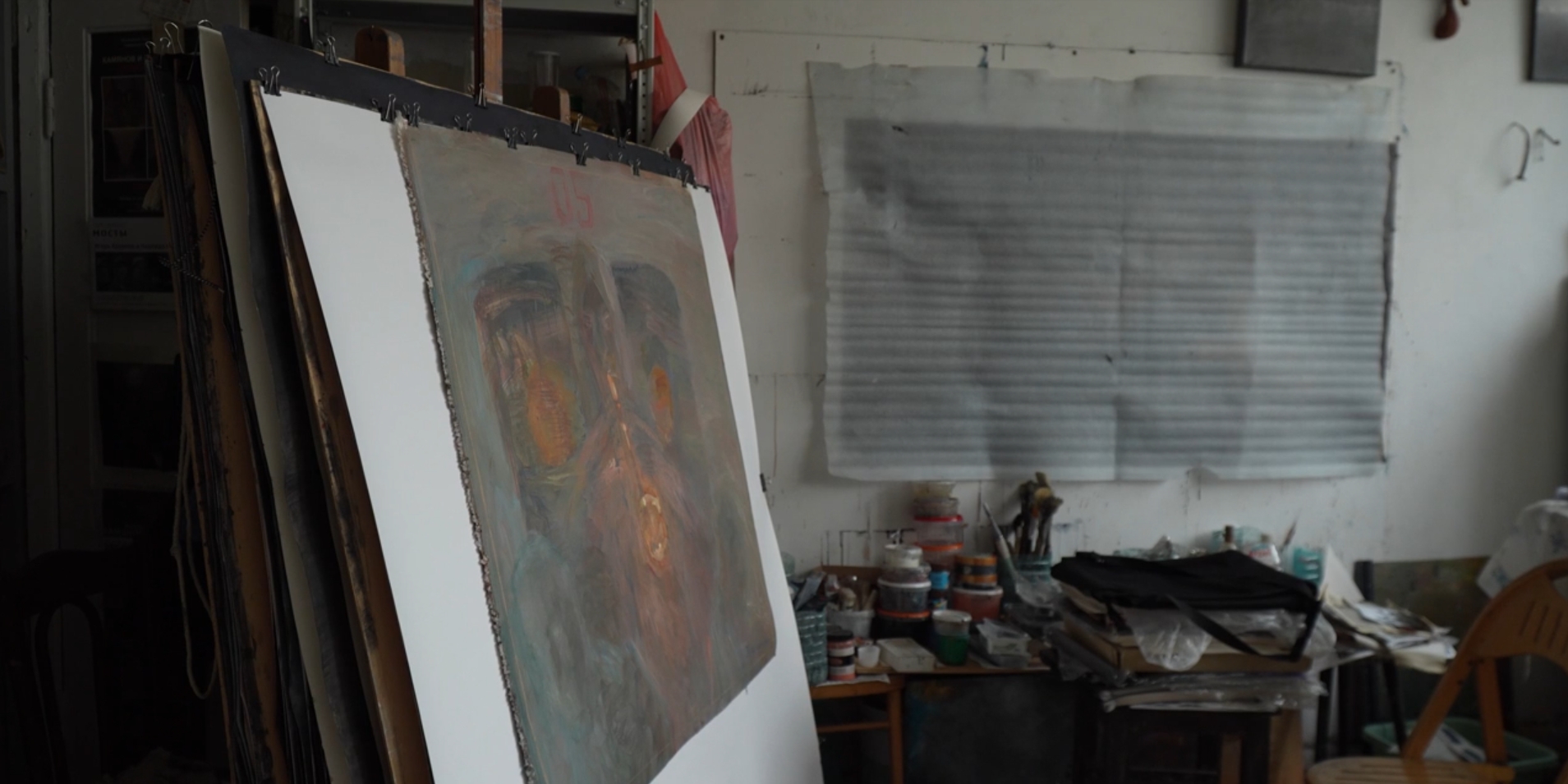
"My distant relative, who died in the war, also used to draw, though there were no other artists in the family. My uncle and aunt lived in New York for long periods and would visit from time to time. They had a daughter, my cousin, who was the same age as me – there was only a week's difference between us. They used to set up a gallery game for us: 'Girls, draw something, we'll hang it all up, and you write down the prices.' We would draw, hang up our pictures, and they would walk around saying, '30 kopecks... 20 kopecks...' I remember they bought a horse drawing from me for 30 kopecks.
Also, since they were always traveling to America, they gave me an album of Georges Rouault published by Skira for my birthday. At that time, I hadn't started studying with Larin yet, so I thought, 'What is this?' But when I opened the album, this artist completely amazed me. To this day, he remains one of my absolute favorites."
Who are your teachers?
"The first person I can call my teacher was Yuri Nikolaevich Larin. I started studying with him to prepare for my admissions because I wasn't accepted into the 1905 Memorial Art School on my first try. Before that, I had been studying with some guy who showed me how to shade in circles and build volume – it felt like operating a lathe machine rather than drawing. I wasn't even allowed to show my work at the portfolio review. Then, through family friends, we found Larin. I brought him my drawings and artwork. He looked at them and asked, 'Who taught you to draw like this?' I studied with him for a year before getting accepted. Connecting with him opened up a completely different world for me. Initially, my goal was simple: just make it look like the subject. But Yuri Nikolaevich's entire apartment was covered with his own pastel works – completely abstract, with nothing lifelike about them. Slowly, I began to understand what it was really all about.
But my true blessing was Matilda Mikhailovna Bulgakova, who taught me painting when I was already at MAKHU (Moscow Academic Art College). She didn't try to make everyone paint like her – she brought out who you truly were. She saw what was unique in everyone. For the first two years, our student works all looked exactly the same; we would even confuse them. But when Matilda Mikhailovna arrived, completely different individualities emerged in literally three months.
I entered MAKHU at 17. For the first two years, we had a different teacher – a completely chaotic woman who made us mix paints and physically hold them up to an apple to compare colors. But the last two years with Matilda Mikhailovna were pure bliss for me. Before that, I used to think, 'What kind of idiot would willingly spend time on something as dull and tedious as painting?' I intended to be a theater designer and was already working in theater – both before and after MAKHU. I worked for six months in the Moscow Art Theatre (MXAT) workshops, then moved to the Comedy Theatre, where I worked for about two and a half years.
While still a student, I designed a production in Norilsk as a production designer. We were introduced to a directing class from GITIS (Russian Institute of Theatre Arts). One guy was staging his graduation play there, and I created the costume and set sketches. It actually made it to the stage; I even kept the brochure. We went to see Maria Osipovna Knebel with it – she was their course director – and brought her my scale model for 'A Midsummer Night's Dream.' She told him, 'You know, Oleg, this girl understands the play better than you do.'"
Is an artist's path more significant than individual works?
"An artist's path is broad. It can be hard to understand what kind of artist someone is from just a single piece. It is especially heartbreaking when a good artist loses their way. And most importantly, it feels to me like there is no turning back. As Cézanne said, this is my small sensation: talent is a very fragile thing. The moment you start forcing it a little, thinking not about yourself but about how it will look to someone else, or when someone comes in, praises an unfinished piece, and says, 'It's great, don't touch it!' – it breaks your momentum. Because maybe you were planning to pick up the brush again, but they tell you to leave it. Then it's no longer yours. This talent, this staying true to your own voice and intuition, is an incredibly fragile thing."
Do you visit your colleagues' exhibitions? What is it for you – a friendly, collective eye-training or just pure curiosity?
"People go to the conservatory or the theater, and we go to art exhibitions because when a person paints something, it’s a message. It’s not just information; it’s an experience they are offering you, and you get a boost of energy from it. You think, 'This corner is beautiful,' or 'The color relationships are captured so well here.' Or maybe they stumbled upon something by chance, and it became a vital part of the artwork."
How did you develop your signature technique?
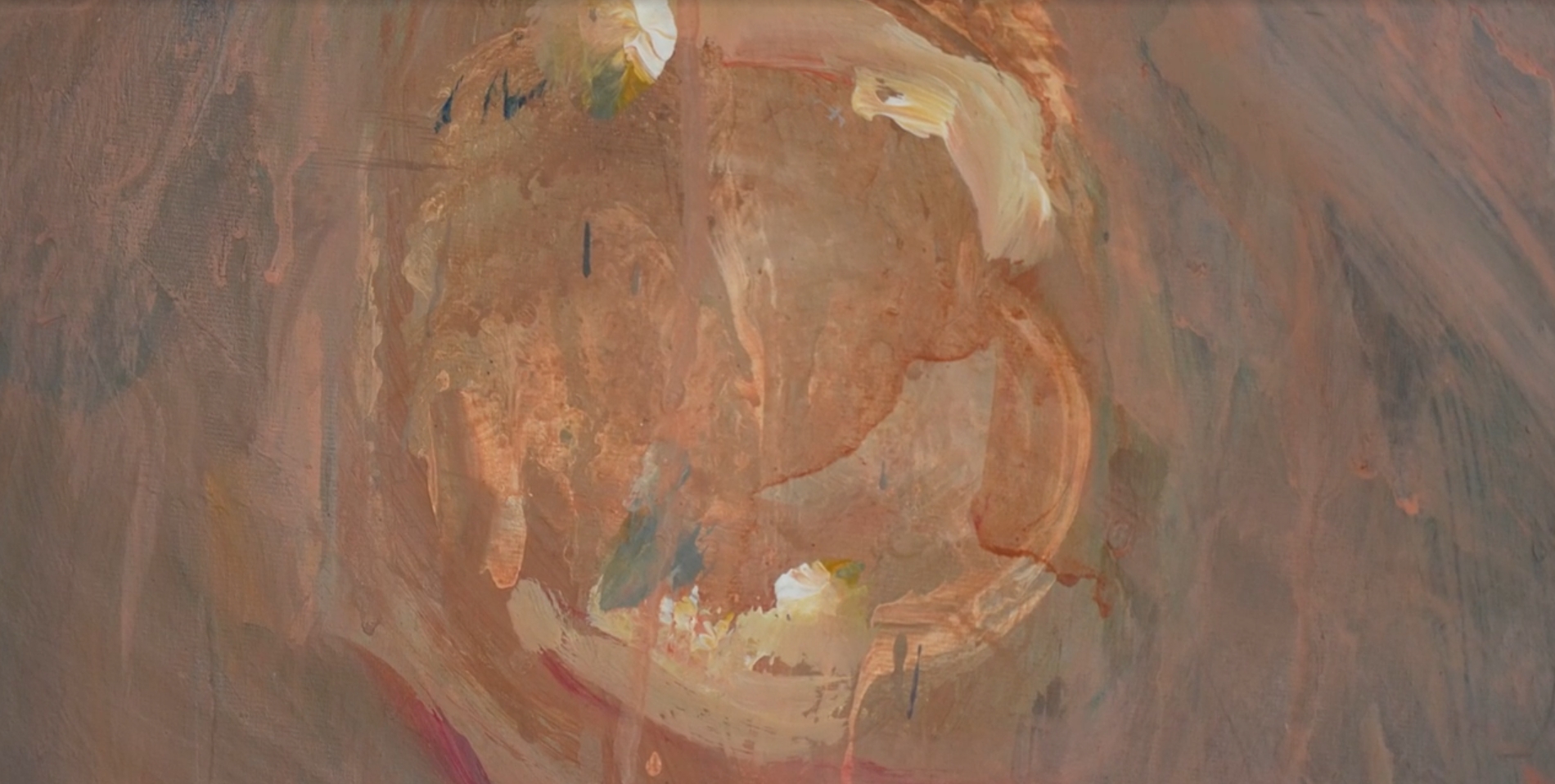
"I don't really have any highly unique technique. Canvas, oil, brushes, a palette knife, a razor blade. The layers happen naturally: if I don't like something, I scrape it off or paint over it. But what you are referring to isn't oil; it's acrylic. Acrylic allows for those multi-layered glazes, where one transparent layer is visible beneath another. It's a fairly fast process. If my reference point for oil painting is the mosaics of Ravenna – – that sense of something precious – then acrylic is closer to frescoes: a matte, opaque surface.
We went to Pompeii, where I saw the Pompeian frescoes, and later I bought a book. I was struck by the fact that these are monumental pieces that have survived for centuries, yet they possess a certain boldness, even a kind of playfulness. There are beautifully painted girls, but there are also completely absurd, silly things. I thought, 'Why am I straining myself so much over a single painting? I need to bring this boldness and playfulness into my work too.'"
Do you ever go back to your old works? Do you change anything?
"Sometimes I finish a painting even ten years later. But mostly, I try not to touch old pieces; it's better to make a new one on the same subject. I consider work finished when it finally clicks for me. If I'm confident in it, no one else's opinion can influence me anymore. If I have doubts, I might listen to a few people. But it also happens like this: Igor (artist Igor Kamyanov, Nadezhda's husband – Editor's Note) comes in and says, 'What on earth is this rubbish?' Then two months later, looking at the exact same painting, he says, 'It's good.' Or sometimes you're painting and thinking, 'How much more is there left to do?' You leave for a month or two, come back, and realize it's almost done. It matures on its own – it just sits there and matures.
Artists can be very critical of others because everyone has their own vector, their own ray of light. An artist sees that someone has done it almost the way they would, but veered off just a little bit, so they start giving advice based on their own perspective. That's why it's better not to invite other artists to your opening nights: they just walk around and badmouth whoever has caught the spotlight. An artist looks through different eyes – the eyes of a creator."
Can you paint on commission?
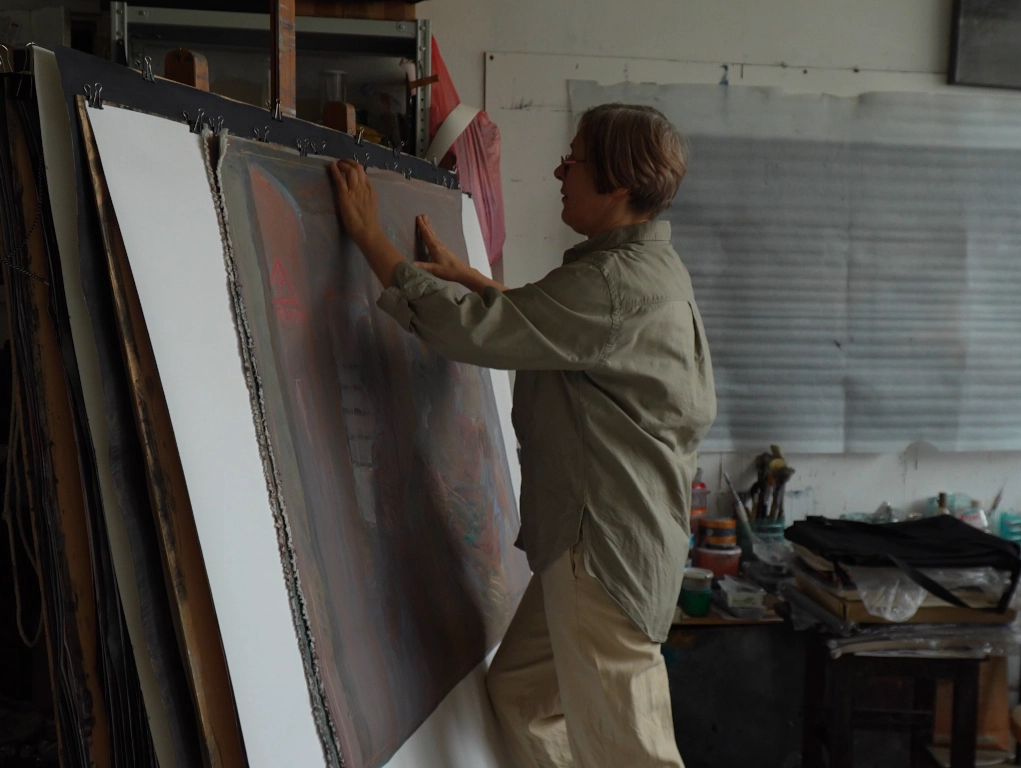
"Once, we were passed a commission for portraits of twelve professors. Igor (artist Igor Kamyanov, Nadezhda's husband – Editor's Note) said, 'Well, who's the one among us who studied at Moscow Academic Art College? Go on, give it a start.' I tortured one guy's portrait over and over again – he ended up looking sort of matted and coppery. In the end, Igor painted everyone, and I only did the suit jackets and ties."
Why the "Public Transport" everyday life cycle? Why this topic in particular?
"I don't invent what I want to paint. It just tumbles out in front of me like mushrooms in a forest – suddenly, you just spot one. I travel a lot, and plenty of interesting situations happen along the way. You ride on public transit, tune out your conscious mind, look out the window, and suddenly something happens – it finds you on its own. It could be public transport, a hair salon, or people on electric scooters out in the street. Or dogs. It's not that I hunt for a character and then invent an environment for them; everything just comes together as a whole: both the character and the place. I don't overthink their backstories, and I'm not particularly interested in them as individuals. They just happened to pose that way. Let's say these people form a strange trio with two noses and four eyes – that alone is why they ended up on the canvas."
Is the road a state of mind for you, or just a means of getting from A to B?
"This constant movement doesn't weigh on me. It’s always interesting: there is a window again, a chance to observe people. There are landscapes too, but I am more interested in humanity and what sparks between people. My theater background definitely plays a role here."
Are you interested in architecture?
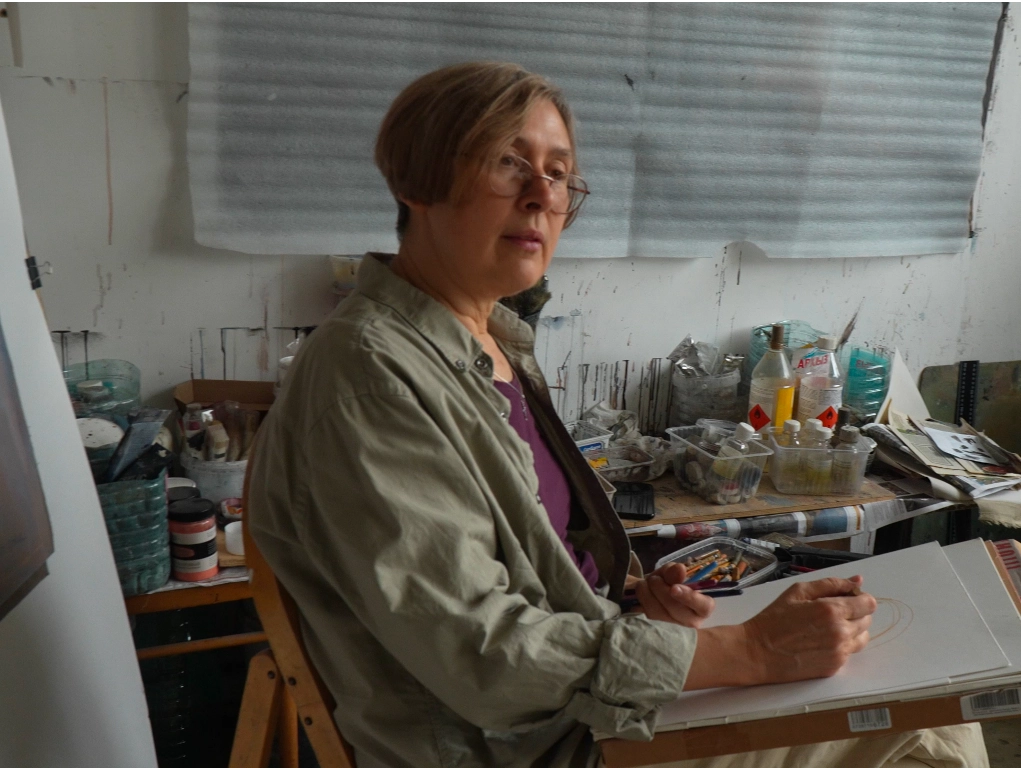
"The look of a place matters: the station, police officers with cockades on their hats, the golden capitals on Prospekt Mira. But to just go and paint a train station or a water tower – no. They have to resonate with the characters. For instance, a guy wearing glasses next to some tank cars – he could have resonated with some architectural arches, but in his case, it's more like the tank cars were simply rolled up to him."
Do symbols hold any meaning for you?
"I don't work with direct symbols. An image must breathe, whereas a symbol doesn't need to breathe – it communicates everything on its own. If you draw a fish, it immediately stands for Christianity. For me, a fish should shimmer, gleam, and just be a fish."
What does the “Along the Way" project mean to you?
"Right now, we are going to showcase a large number of works from the cycle dedicated to trains. Previously, I only exhibited them in small selections, but now it’s going to be a cohesive story. I think it’s interesting to mark a milestone like this. Currently, I'm working on several pieces about trains, specifically focusing on compartment and second-class open-car carriages. Our standard of living is rising! I wanted to create something based on an old childhood memory: I used to be taken to the Durov Animal Theater, where they had a mouse railway. White mice would scurry into the train cars, ride past tiny birch trees, then night would fall, little lights would turn on, and they would arrive in Sochi. It was pure magic – the theater, the glowing stage sets, the animals, the train, the sea. I want to make something on this theme, but I don't know exactly what it will be yet."
Has that childhood perception remained with you?
"I think all artists are like that... Well, at least the ones we are friends with are. I understand that the things that captivate me are driven by associations. For example, those demobbed soldiers on the train look just like Spanish grandees to me – everything is golden, everything glitters. If those Spanish grandees hadn't popped into my head, I would probably view these young men differently. When you see something, associations surface first, blending into what you eventually want to depict.
But it’s not about the character or the creature; it’s about the surface. The painting itself is what matters most, not the character. For instance, while I'm painting, a certain person might suddenly appear, and they look so terrifying! Usually, I just paint over them because they distract me – they bring in unnecessary drama and psychology. Later I might look back and think, 'He wasn't such a bad guy after all.' But no, that phase is gone, and that's fine. Although, maybe it’s worth returning to that motif and making a completely different piece."


